
Ode à nos forêts
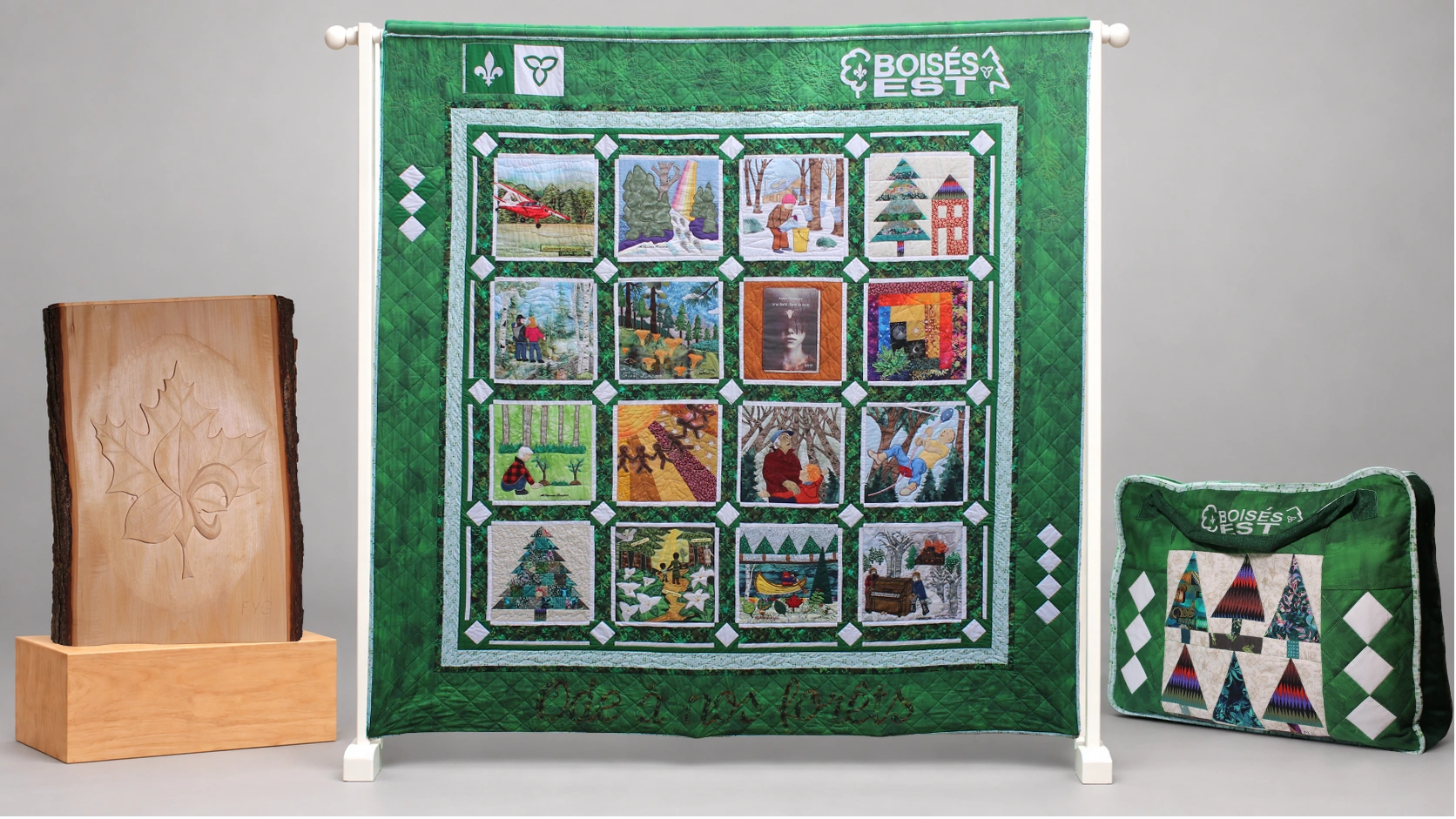
In Eastern Ontario, the forest holds much more than trees. It carries childhood memories, family stories, maple groves, ancestral homes, trades, and traditions passed down from one generation to the next.
To create Ode à nos forêts, Boisés Est invited students from Rockland and adults from several communities to share what woodlands mean in their lives and within Franco-Ontarian culture. Facilitated by YAO, the workshops enabled 76 participants to contribute 290 texts and quotations.
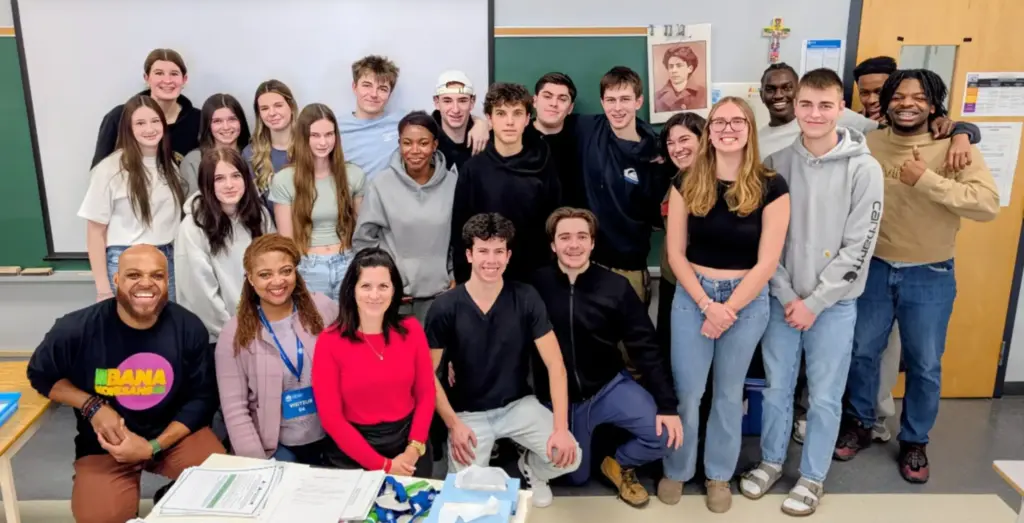
On March 4, 2026, students in the FRA4UU course at École secondaire catholique L’Escale in Rockland took part in a writing workshop led by YAO in collaboration with Boisés Est. Their texts contributed to the collective creative process exploring Franco-Ontarian forest heritage.
Once transcribed, organized and anonymized, these contributions were shared with the artists. They inspired a poem by YAO, a textile work comprising 18 panels divided between the Ode à nos forêts quilt and its artistic carrying case, as well as a wood sculpture. Across these different art forms, the community provided the source material for a body of work deeply rooted in its region.
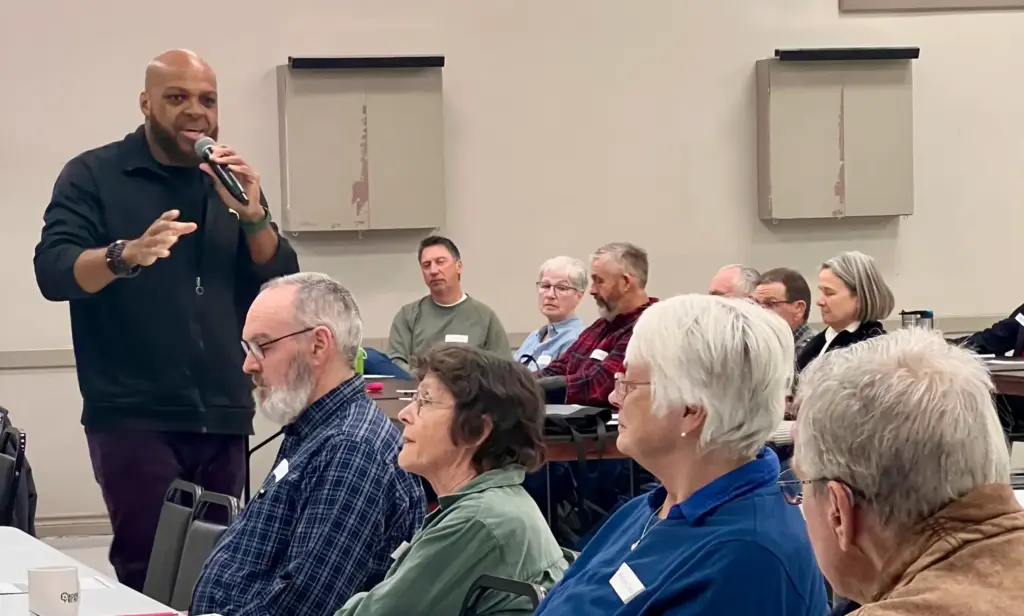
YAO leads a community workshop exploring memories, stories and the connections participants have with the woodlands and forests of Eastern Ontario.
When Memories Become Art
Everything began with one question:
How do woodlands and forests contribute to the vitality of our Franco-Ontarian heritage, arts, and culture?
The responses brought forward forest walks, sugar bush memories, reforestation efforts, forestry-related occupations, family homes, and the sense of well-being found in nature. Each participant contributed a fragment of their relationship with the land.
The collected stories were then shared with the artists, who interpreted them through their own creative practices.
They inspired three main works:
- YAO created the poem Ces gens qui plantent des arbres…, inspired by the voices and memories of the community.
- Ten quilters created 18 textile panels featured in the Ode à nos forêts quilt and its artistic carrying case.
- François Gour created La rencontre des 3 emblèmes, a basswood bas-relief bringing together the maple leaf, fleur-de-lis and trillium.
Together, these works show how the same stories can move from one art form to another while remaining deeply rooted in the community that inspired them.
Those Who Plant Trees…
Inspired by the words shared during the workshops, YAO’s poem connects tree planting with family memory, well-being, creativity and the continuity of the French language in Eastern Ontario.
The woodlands become a place of healing, a living archive and a legacy to pass on to future generations.
A Forest Stitched from Stories
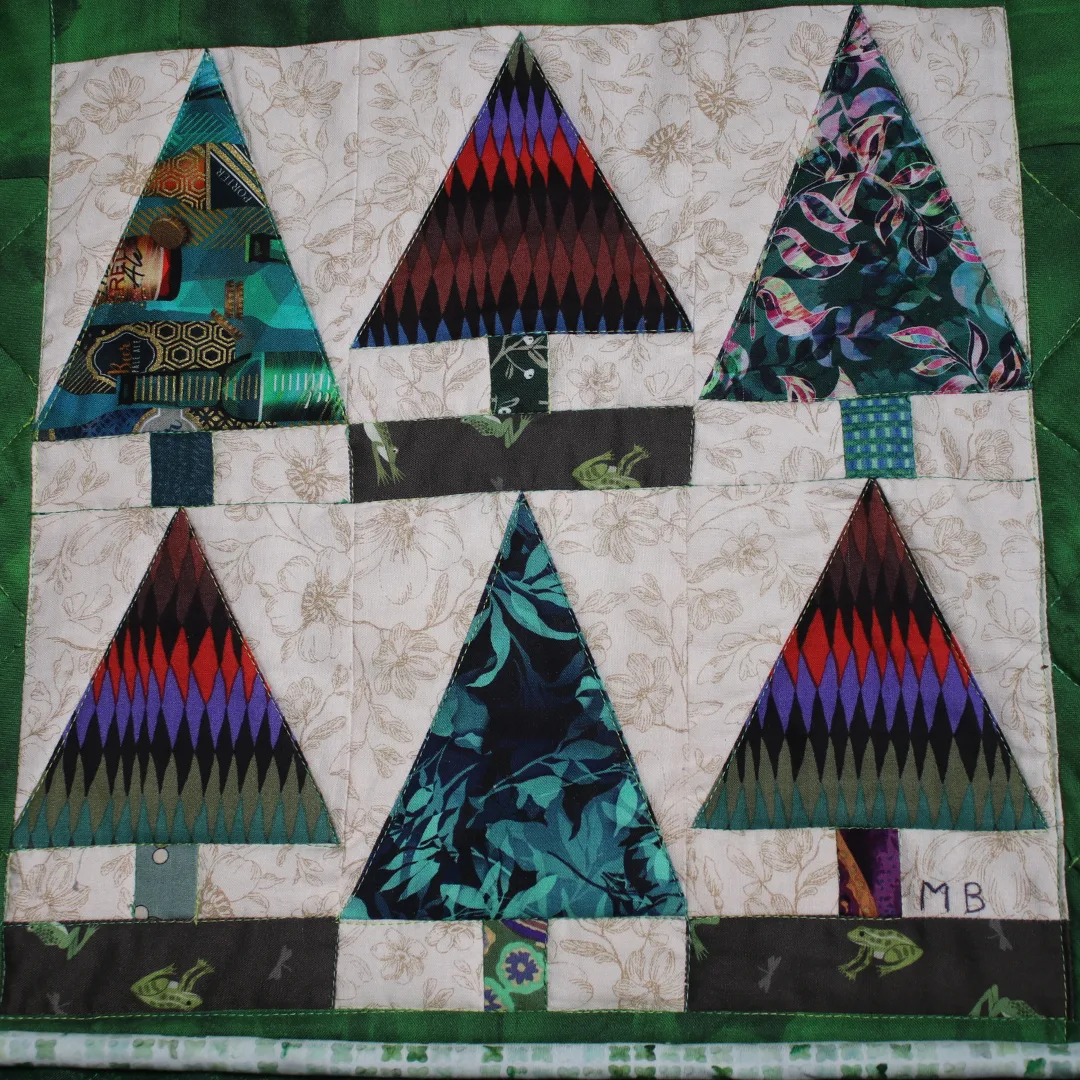
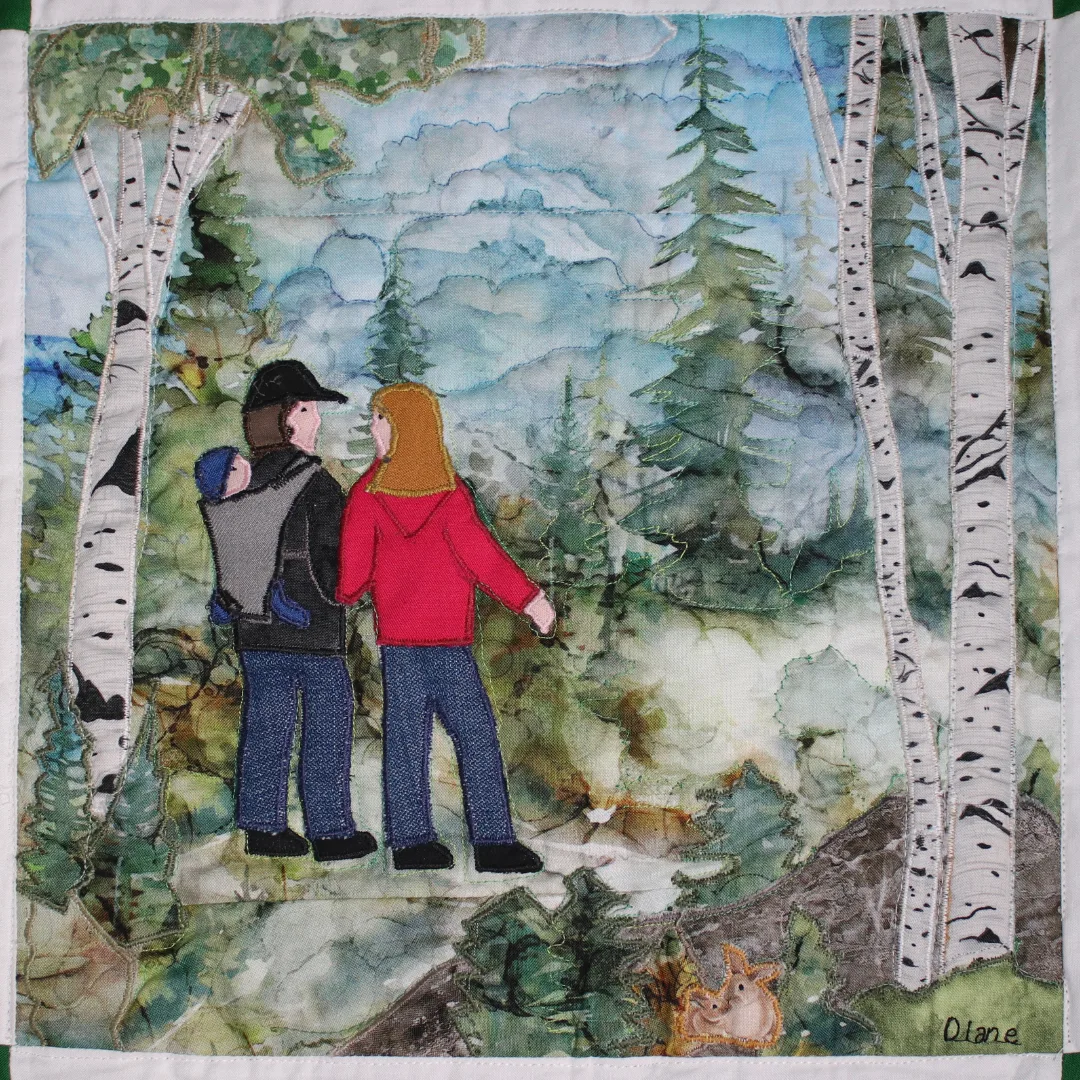
Ten quilters drew inspiration from the community collection as well as from their own memories and knowledge of the region. Using fabric, stitching, embroidery and quilting, they transformed these stories into landscapes, figures and traces of memory.
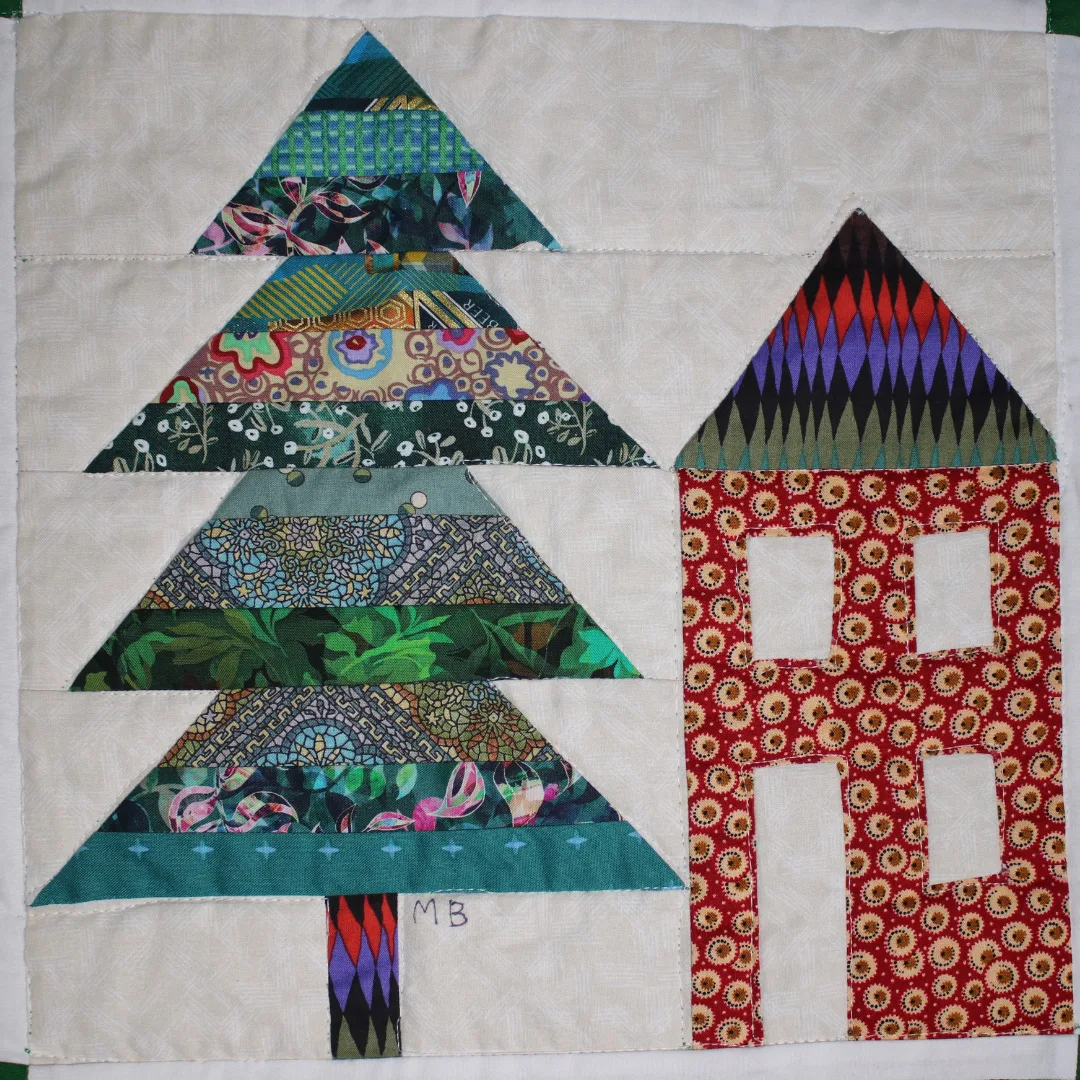
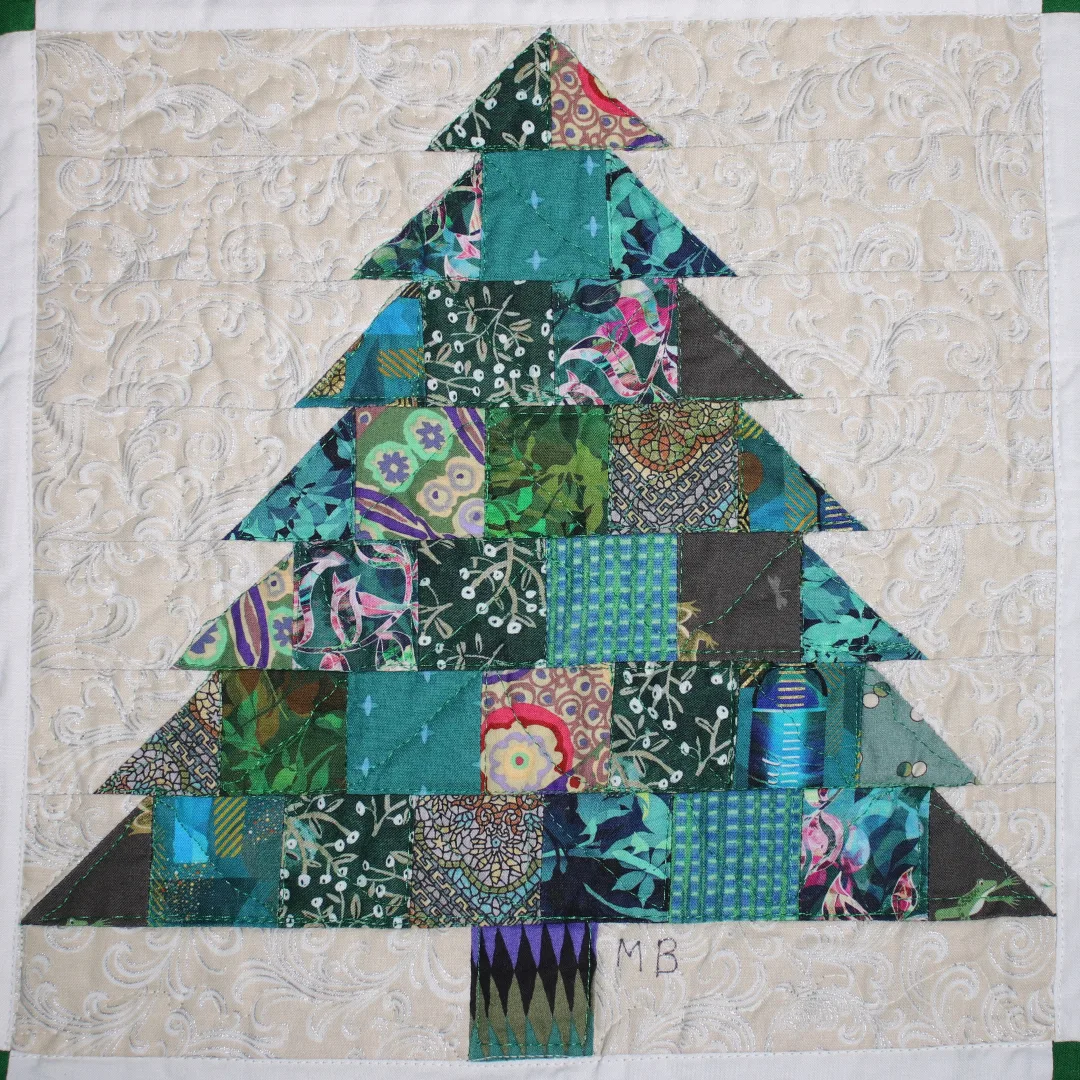
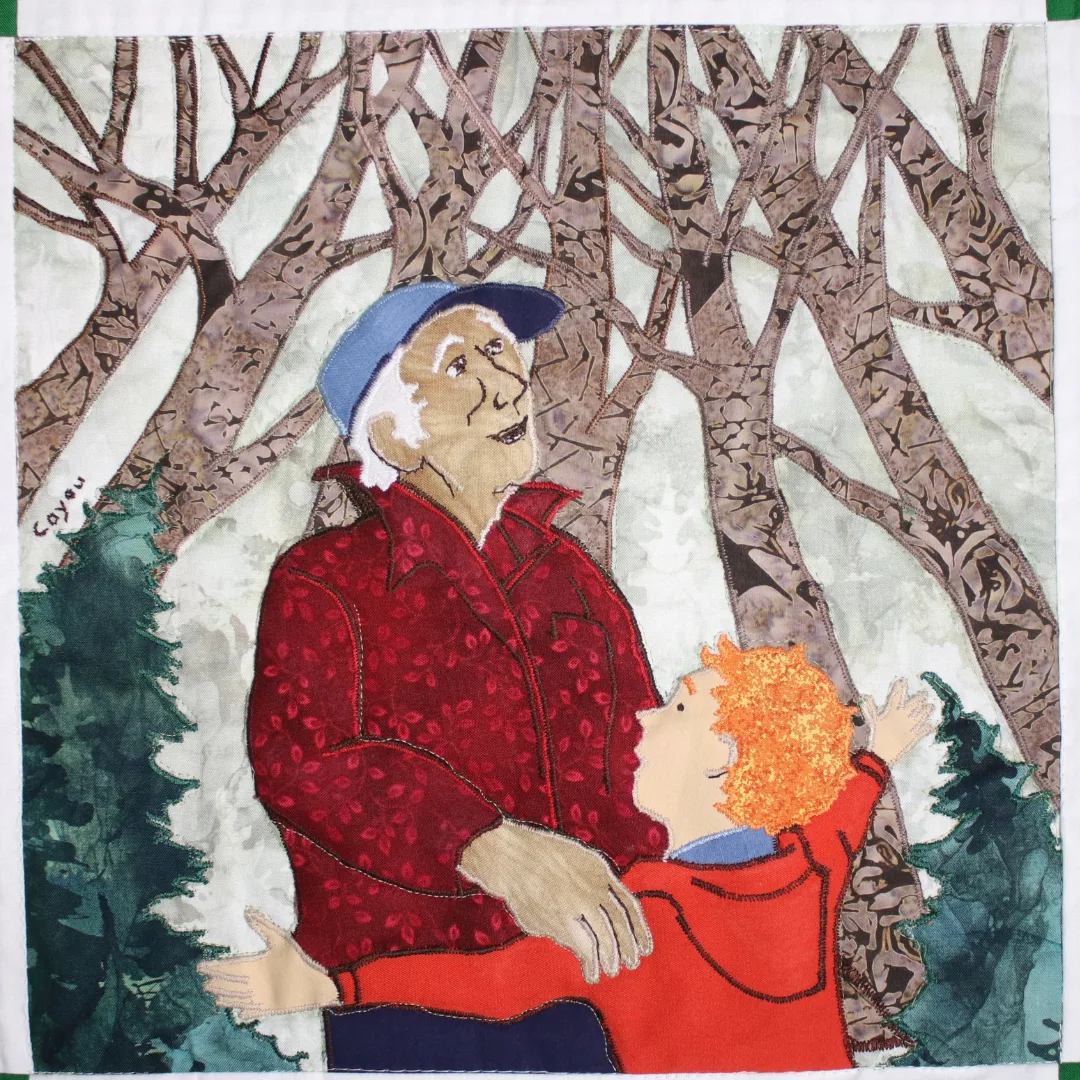
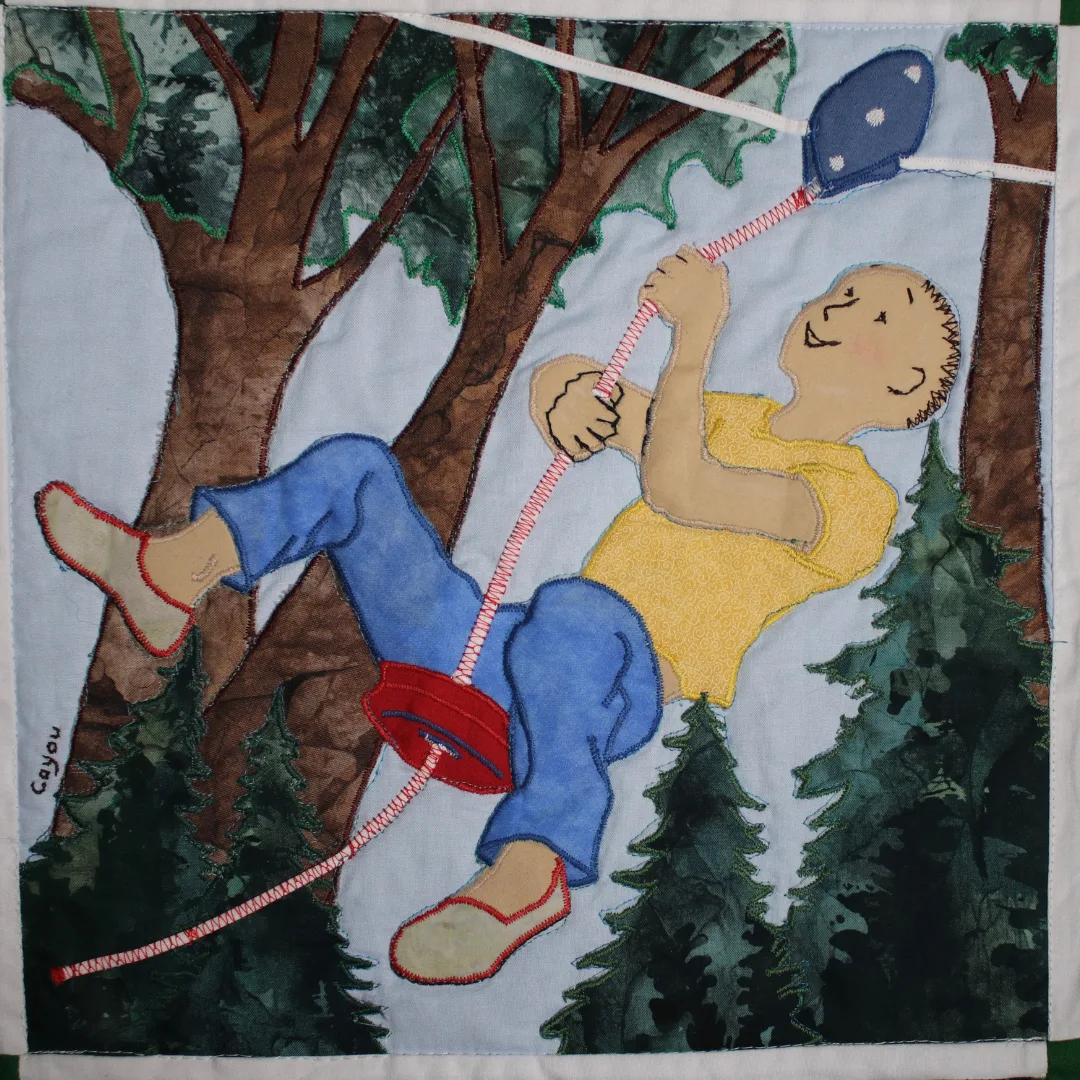
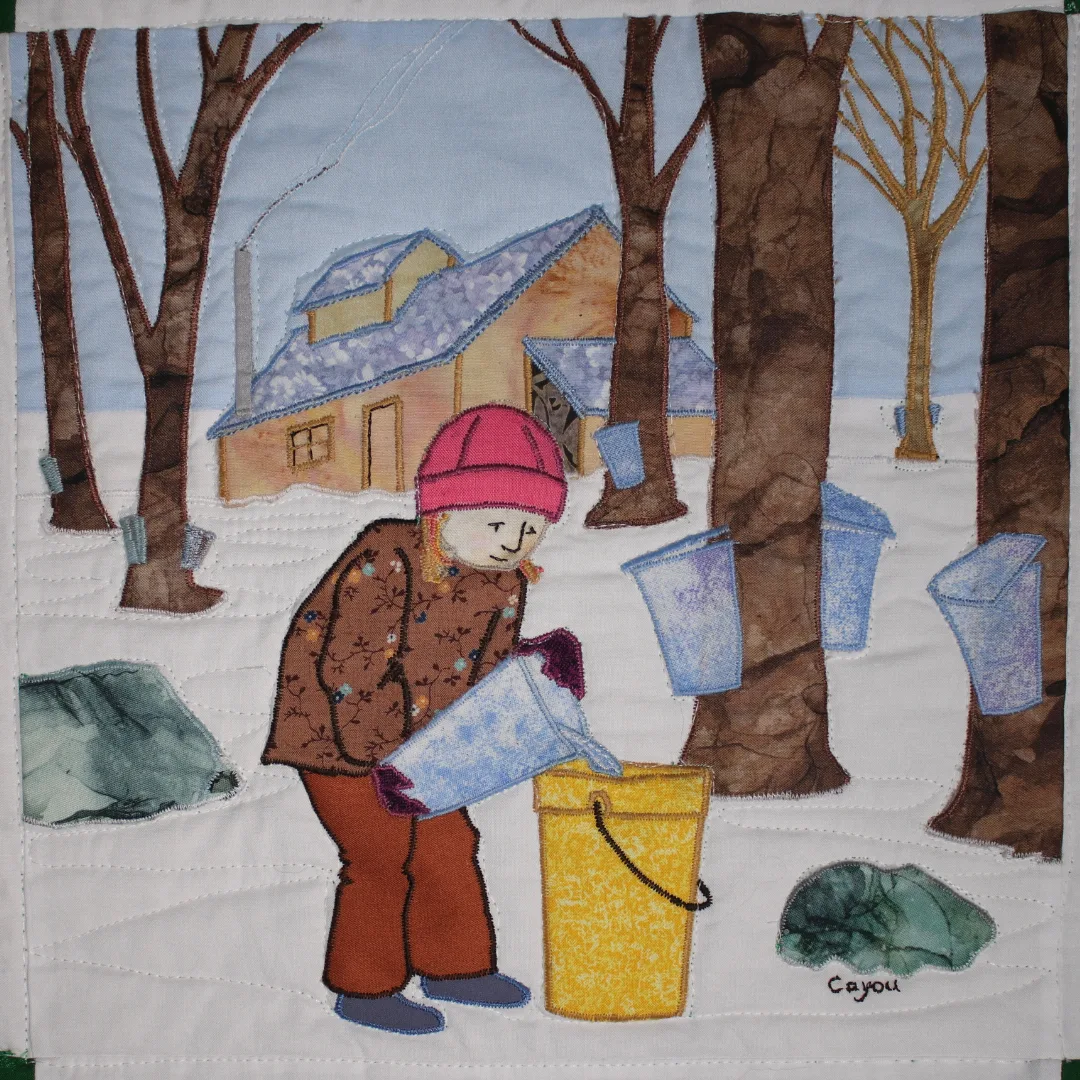
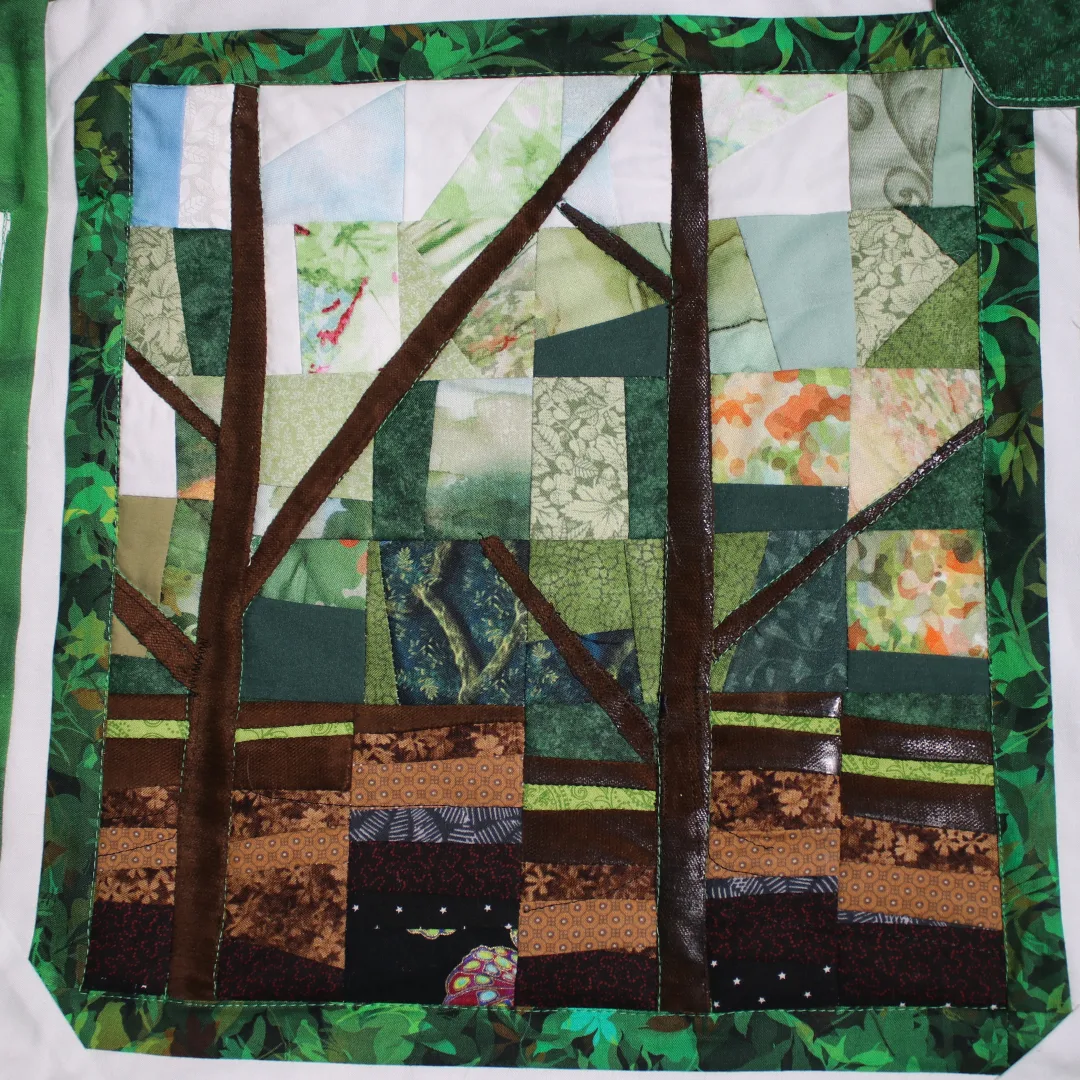
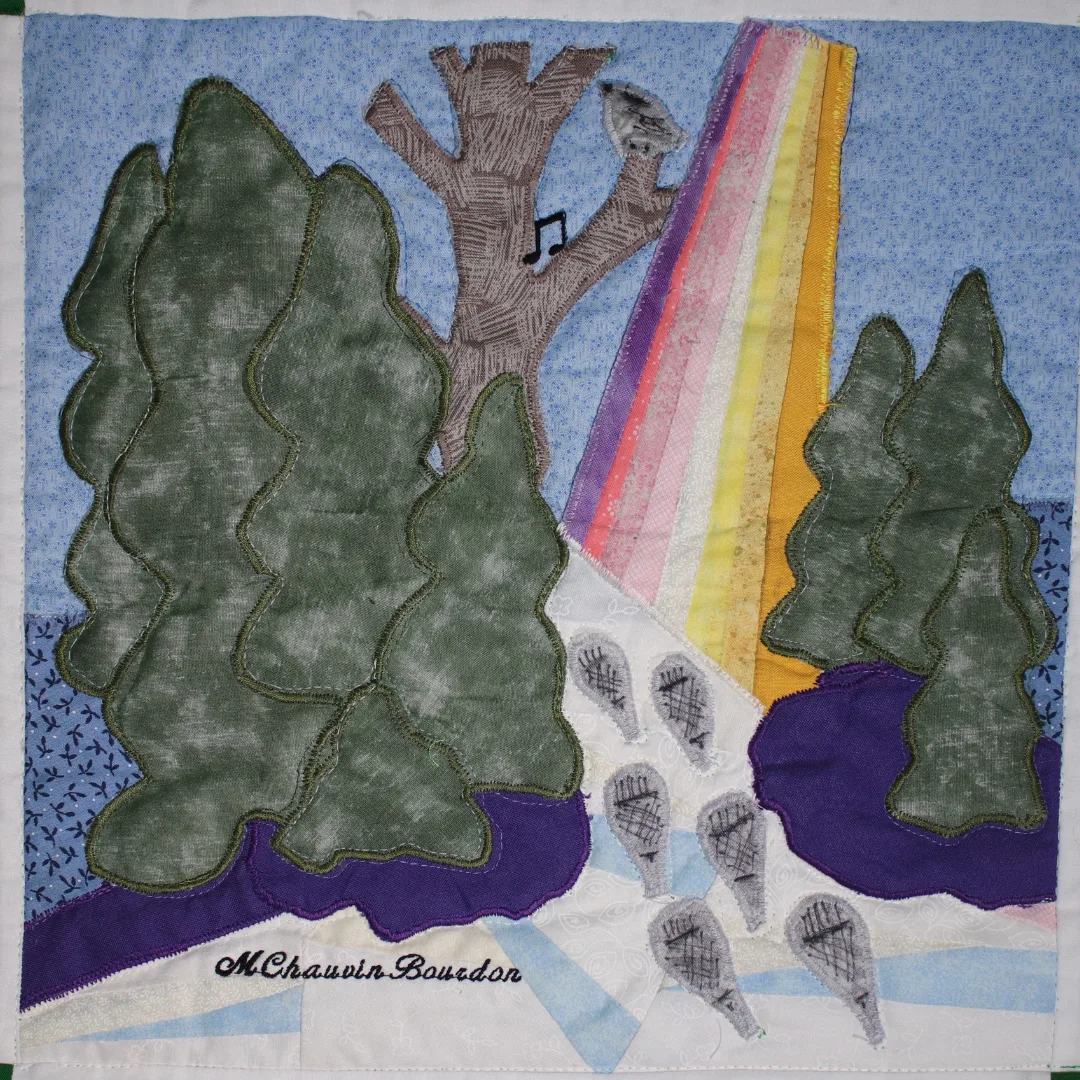
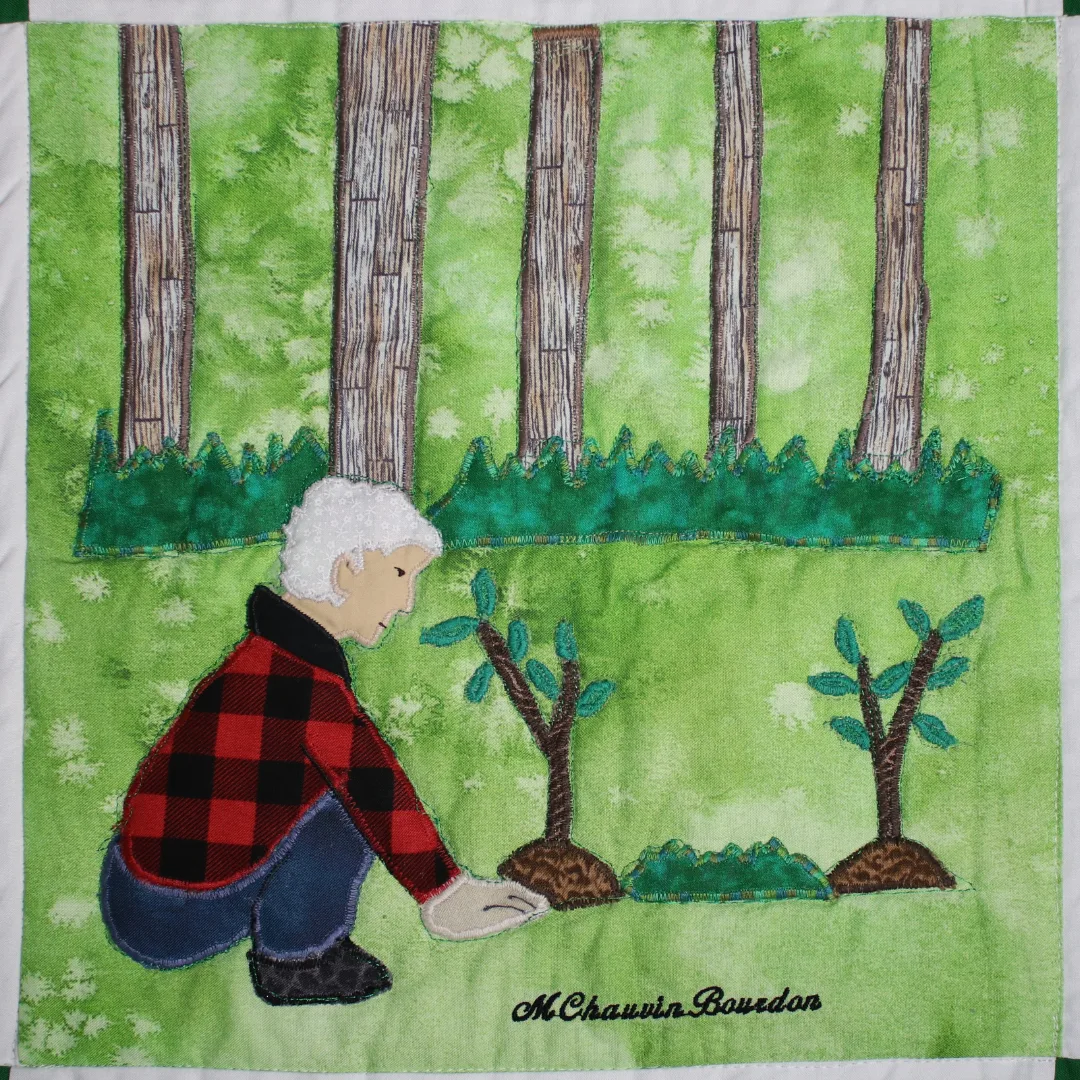
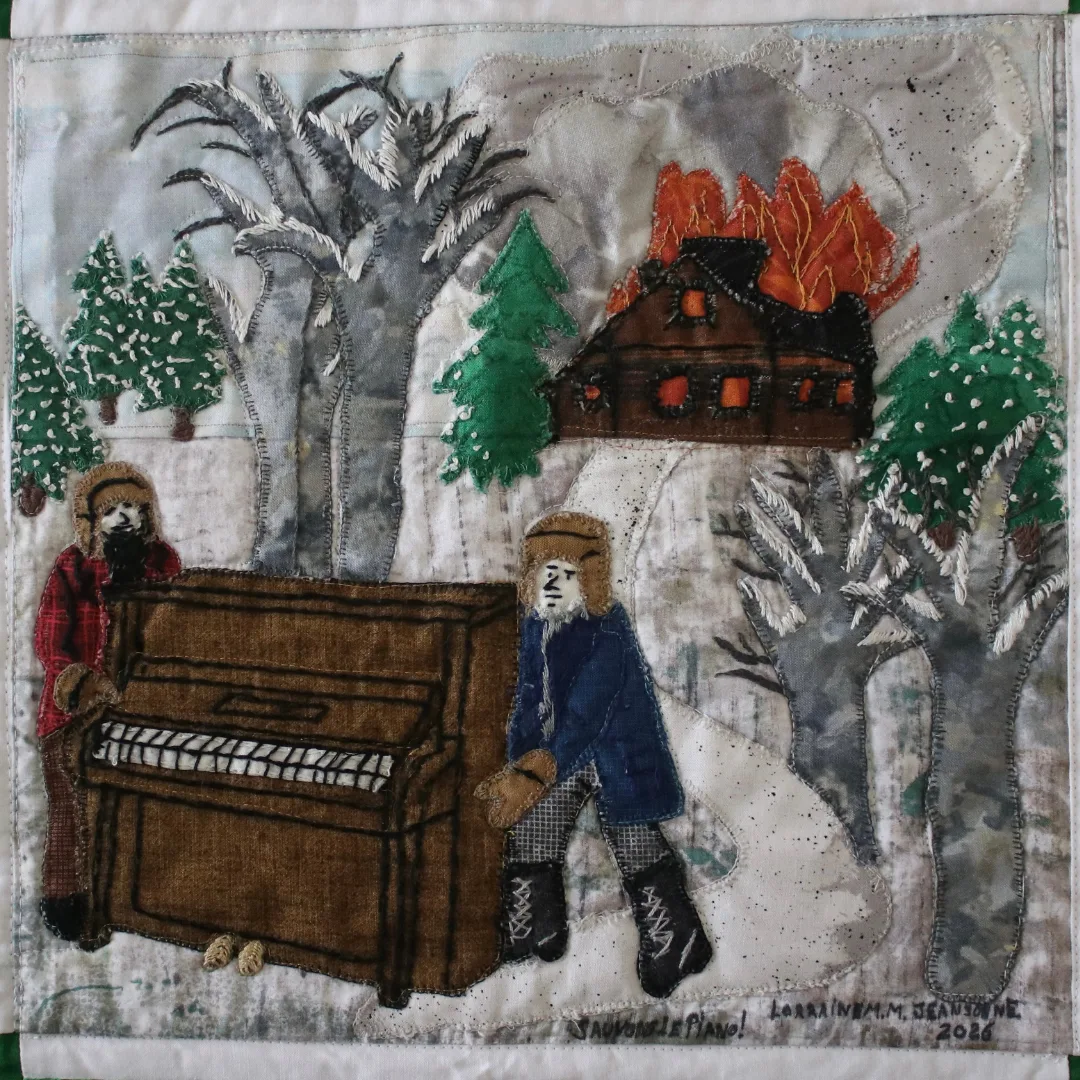
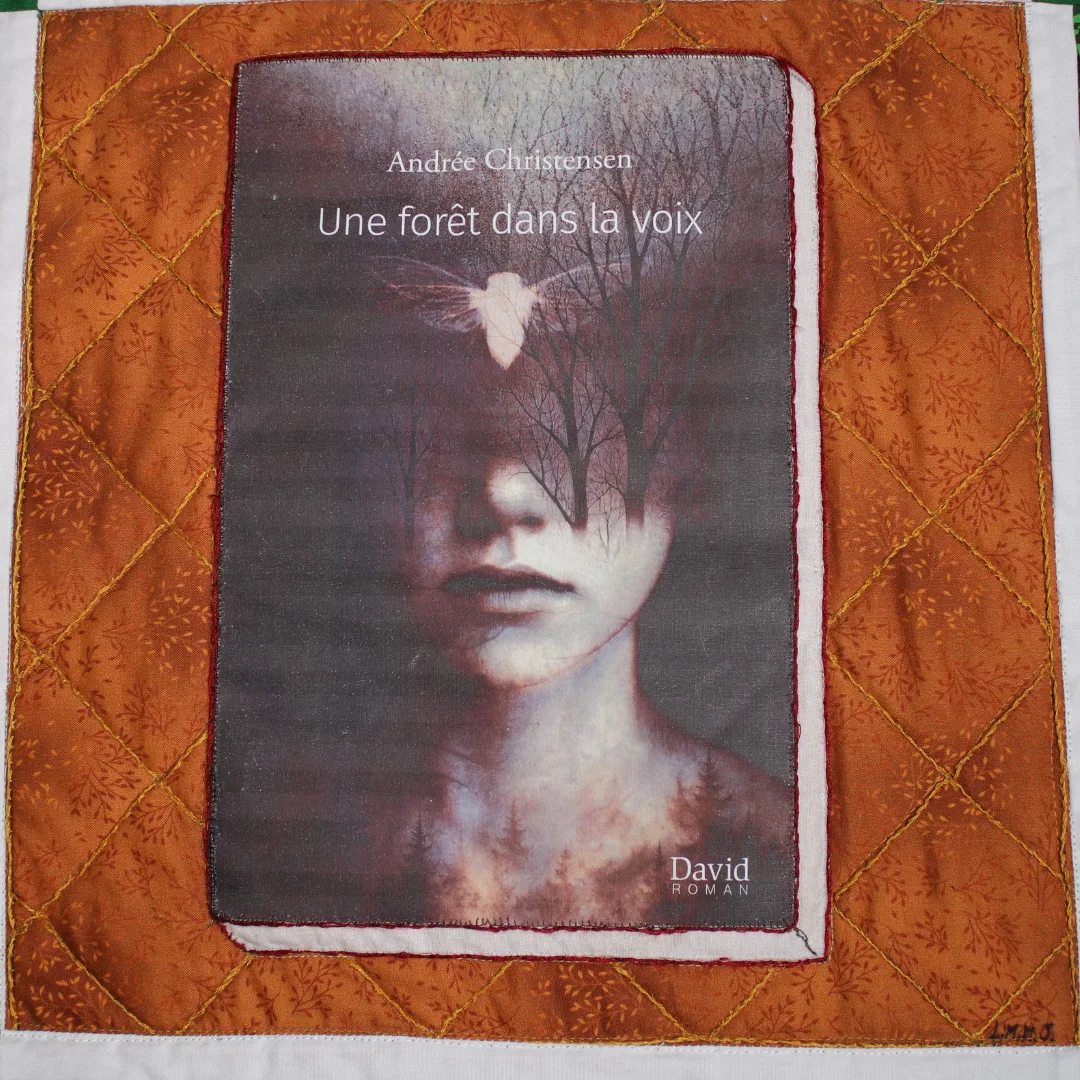
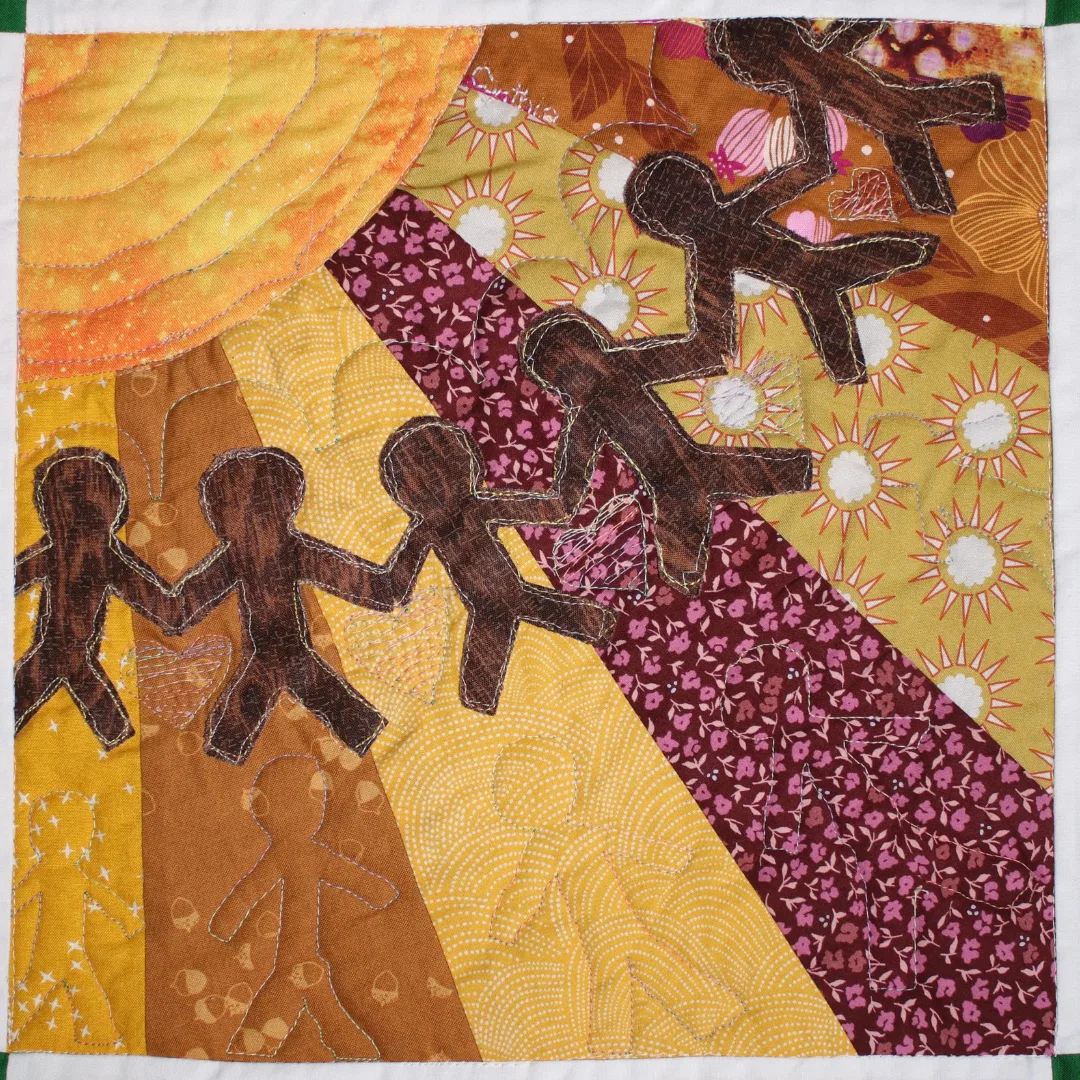
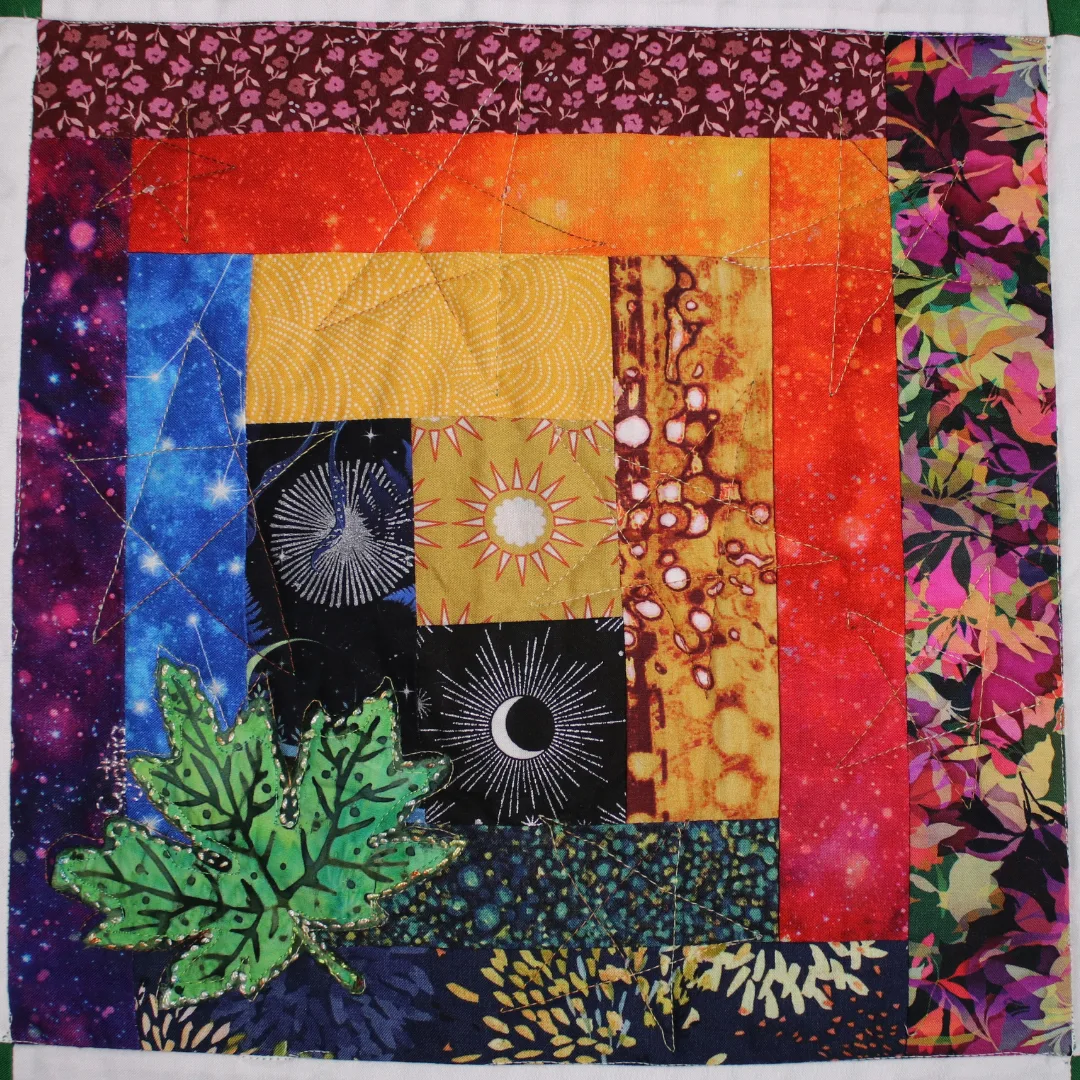
The 18 textile panels evoke places and experiences such as Larose Forest, the Castor River, sugar bushes, ancestral homes, the history of Embrun, tree planting and knowledge passed down through generations. Others explore friendship, childhood, freedom and the restorative power of nature.
Francine Cayouette oversaw the overall design, assembly and quilting. Sixteen panels make up the main quilt, while two others are incorporated into the two sides of its artistic carrying case. Together, they form a textile memory of Franco-Ontarian life and landscape.
The Ode à nos forêts Quilt
Measuring 88 by 88 inches, Ode à nos forêts brings together 16 textile panels in the main quilt. Two additional panels are incorporated into the two sides of its artistic carrying case, which measures 24 by 18 by 5 inches.
Together, the quilt and its carrying case feature 18 works created by ten Franco-Ontarian quilters.
The quilt can be exhibited in different settings, allowing the stories, landscapes and memories that inspired it to travel beyond the communities where it was created.
To learn more about opportunities to exhibit the quilt, contact Boisés Est.
The 18 Textile Murals
Each of the 18 textile panels tells a story of its own. Inspired by stories gathered during the workshops, as well as by the quilters’ own memories and knowledge, they evoke Larose Forest, sugar bushes, the Castor River, ancestral homes, friendship, intergenerational transmission, renewal and the connections between communities and the land.
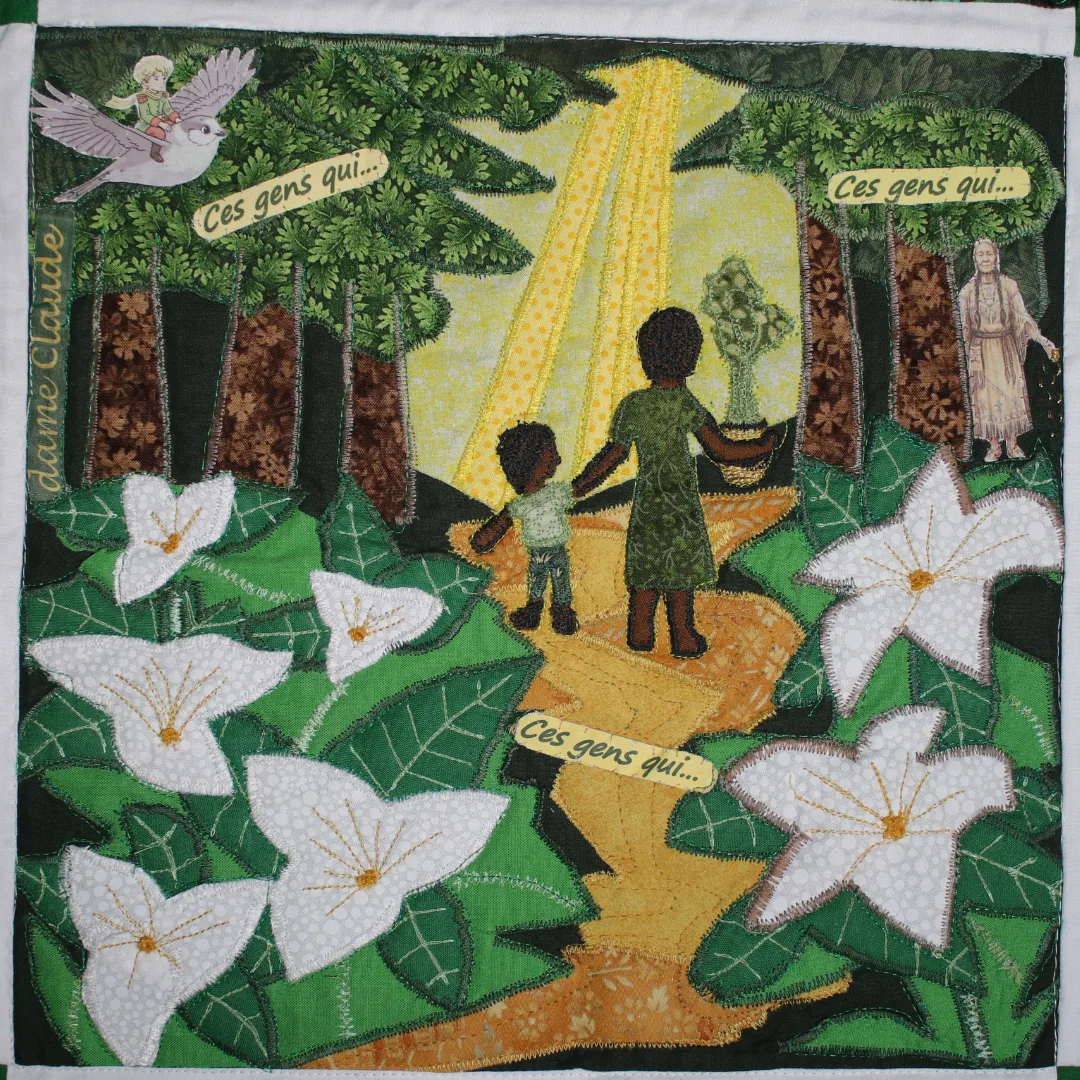
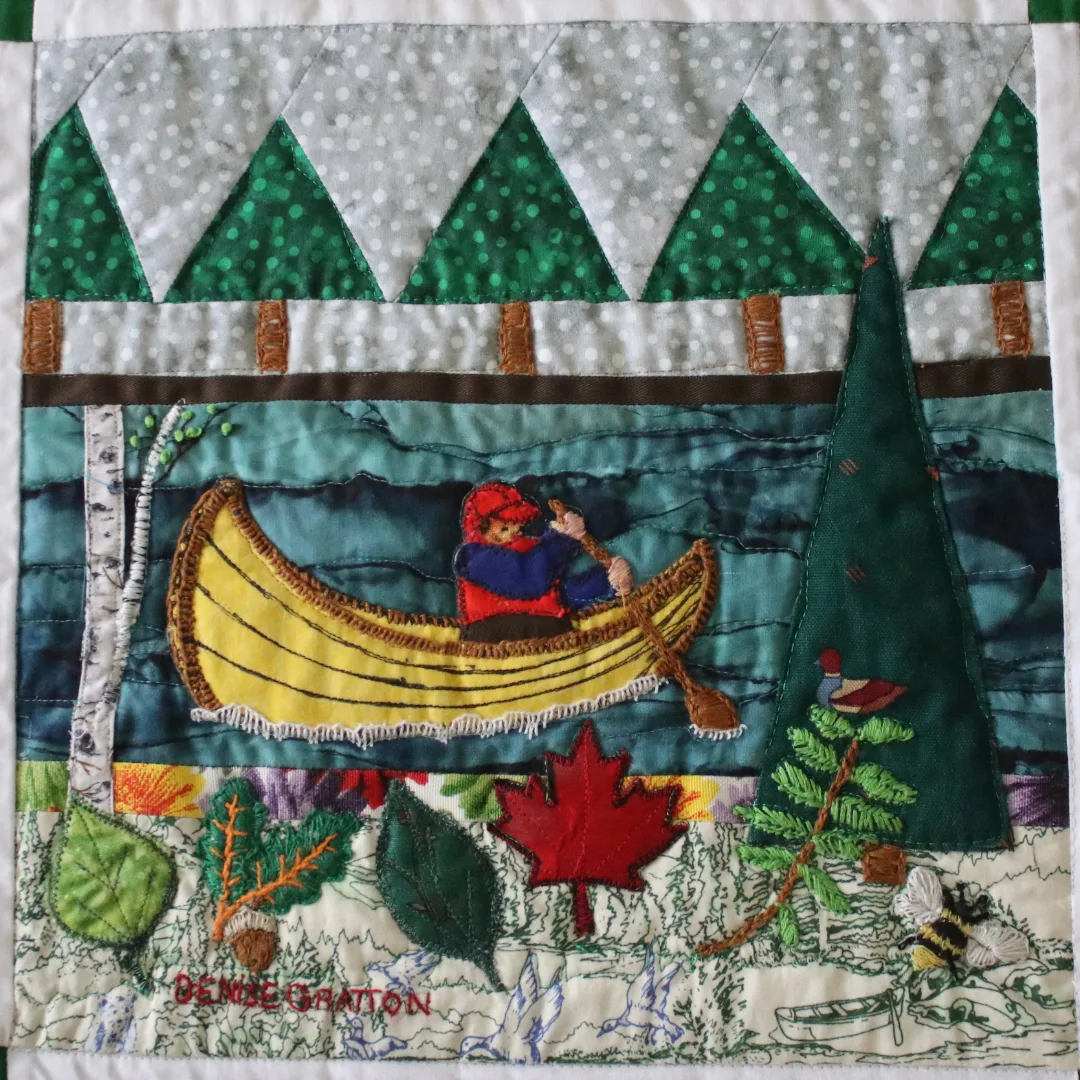
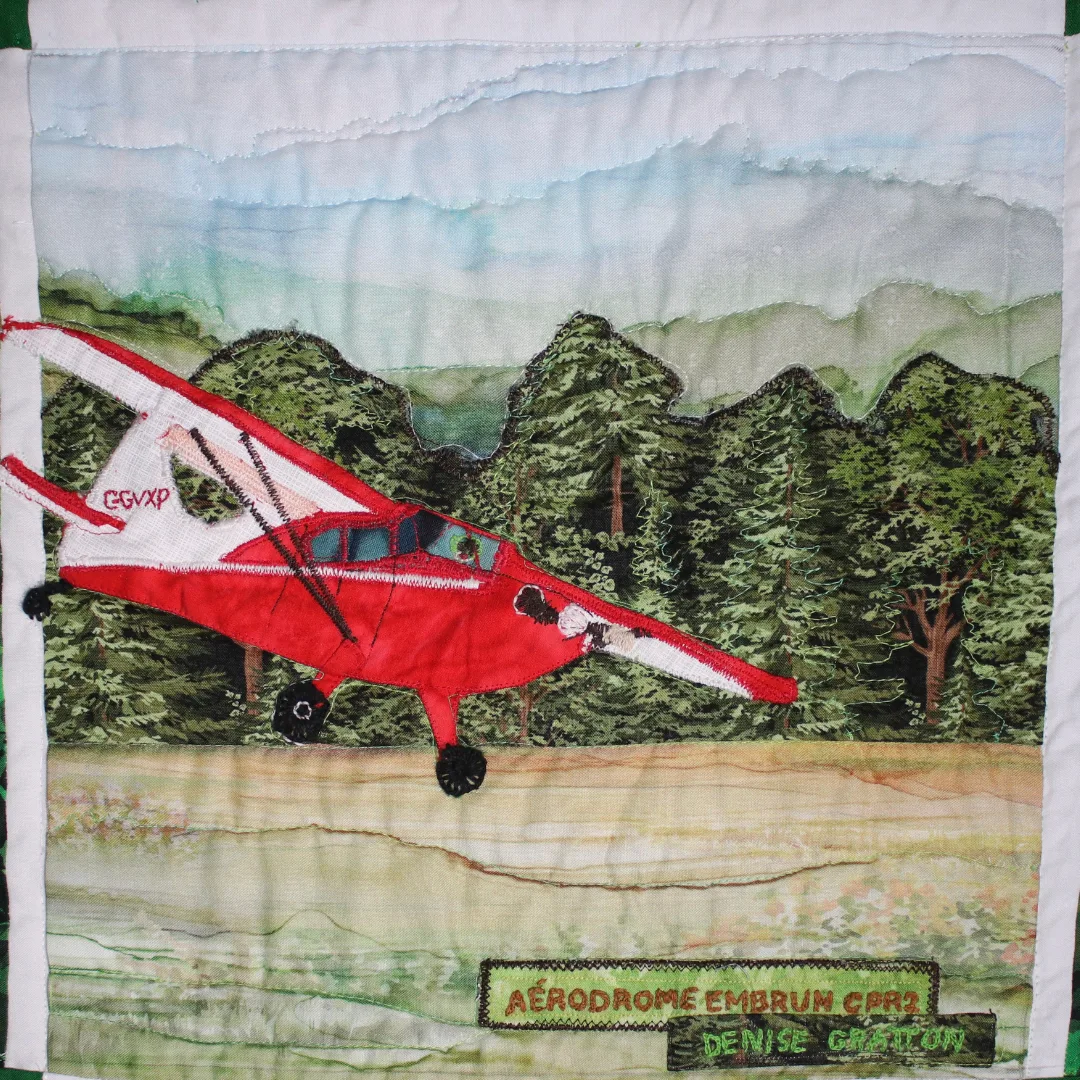
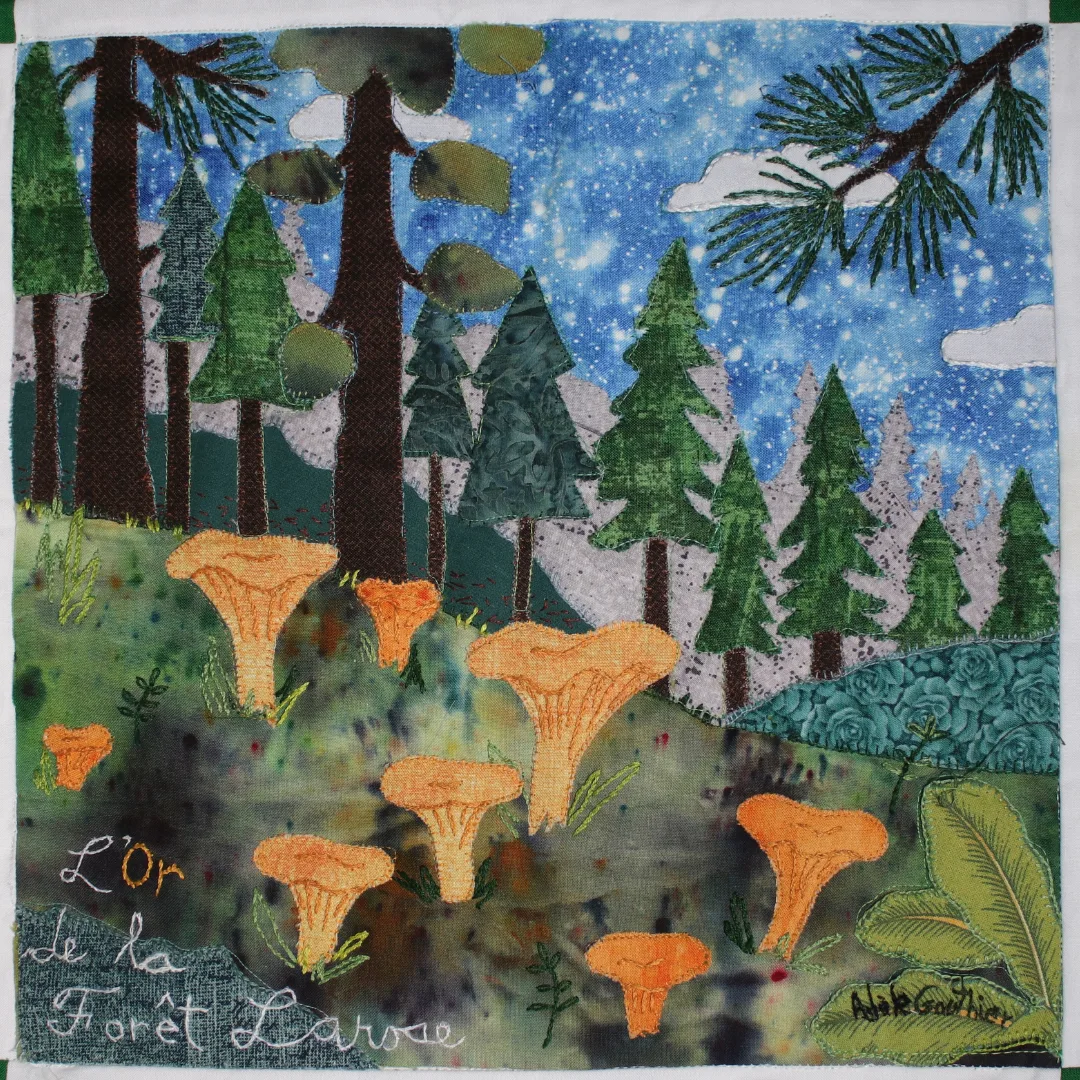
La rencontre des 3 emblèmes (A Meeting of Three Emblems)
François Gour continues this exploration of forest heritage with La rencontre des 3 emblèmes, a wall-mounted bas-relief carved from a piece of basswood with its natural bark edge preserved.
Measuring 43 × 58 cm, the work was carved using gouges and wood chisels. A maple leaf brings together two fleurs-de-lis and a trillium leaf, uniting three emblems in a single composition. The wood, its texture and its natural form extend the project’s reflection on forests, the land and a sense of belonging.
Planting to Pass It On
In Ode à nos forêts, the forest becomes a living archive. It preserves the traces of families, villages, professions, and the efforts made to reforest and protect the land.
Planting a tree thus takes on a broader meaning. The gesture prepares for the future while extending a story. It reminds us that caring for woodlands also means caring for the stories, knowledge, and communities rooted within them.
All Credits
- Project led by: Boisés Est, Association française des propriétaires de boisés privés de l’Est de l’Ontario
- Overall project management: Lorraine Jeansonne and Jean Saint-Pierre
- Overall coordination, content development and textile creation: Lorraine Jeansonne
- Coordination of the À vos stylos! writing component: Déla Hoyi
- Workshop facilitation, poem creation and performance: Yaovi Hoyi, YAO
- Overall design, assembly, quilting and coordination of textile work: Francine Cayouette
- Quilters: Micheline Bercier Larivière, Francine Cayouette, Stéphanie Cayouette, Michèle Chauvin-Bourdon, Claude Gagné, Denise Gratton, Adèle Gauthier, Lorraine Jeansonne, Cynthia Lafortune, Diane Sabourin
- Wood sculpture: François Gour
- Photography of the community workshop: Tayed Amine
- Photography of the school workshop at L’Escale: Boisés Est
- Photography of the quilt, textile panels, wood sculpture and carrying case: Mathieu Fortin
- Text transcription: Louise Lessard, Lorraine Jeansonne
- Institutional and community partners: École secondaire catholique L’Escale de Rockland, Conseil scolaire de district catholique de l’Est ontarien, Township of Alfred and Plantagenet, Centre communautaire Lucien Delorme de Wendover, Mouvement d’implication francophone d’Orléans, Storytellers Canada / Conteurs Canada